It’s a great time to think about receiving midsemester feedback on your course. I have written about the topics in the past on my blog, however, this time I used a new resource that might be helpful for multiple purposes:
Google Illuminate is an AI tool that creates podcast-style audio summaries of research papers. It’s designed to make complex academic information more accessible and engaging.
How it works
Input a research paper, PDF, orURL into Illuminate*, or search for a topic.
Illuminate generates an audio summary that explains the key points of the document.
You can ask questions about the document, and Illuminate will provide a text output.
You can convert the text output into a podcast answer.
*I do NOT recommend inputting copywritten information into this tool. However, it is optimized for computer science topics, and supports research papers hosted on arXiv.org
I used some of my previous blog posts to create a podcast that cover several aspects of creating developing and analyzing mid-semester feedback using the following prompt:
Create a relaxed and spontaneous conversation with a laid-back and curious host and a lively, fun, and relatable guest. They’ll dive into the topic in a free-flowing, casual style that feels like you’re eavesdropping on a chat between friends.
I used 4 resources from my blog:
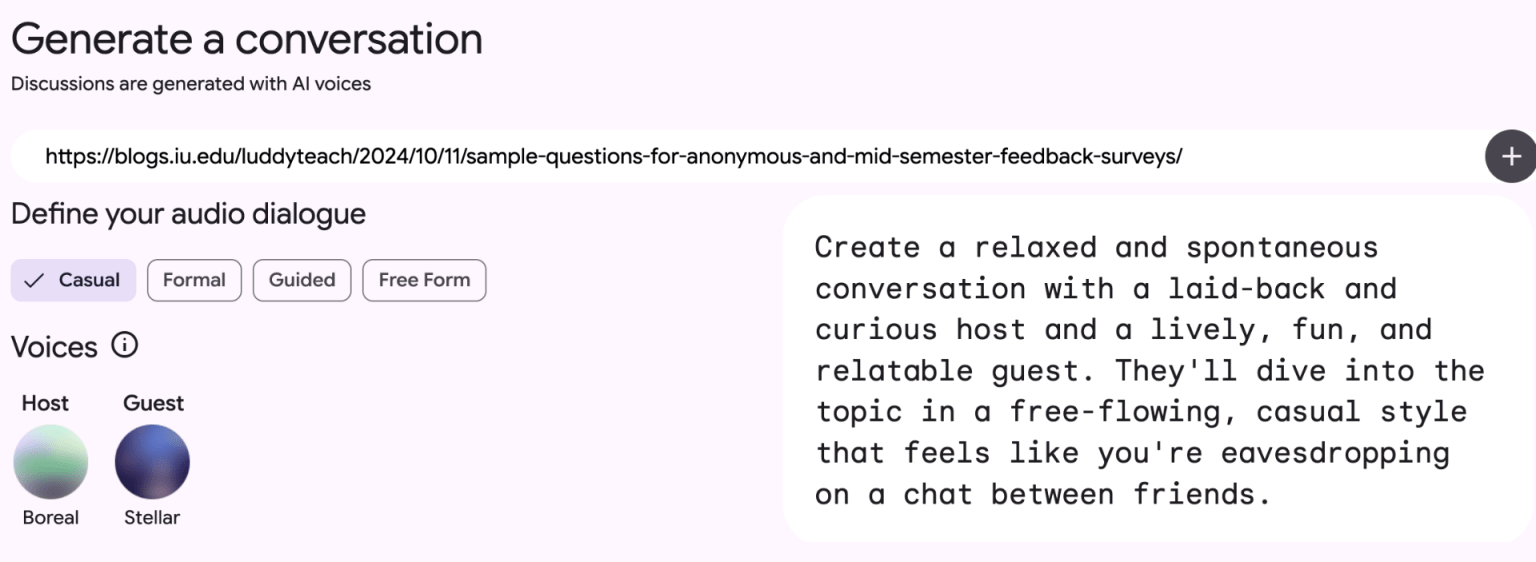
A 4-minute conversational podcast related to providing mid-semester feedback was generated that provides a decent overview of the topic is generated with a text transcript.
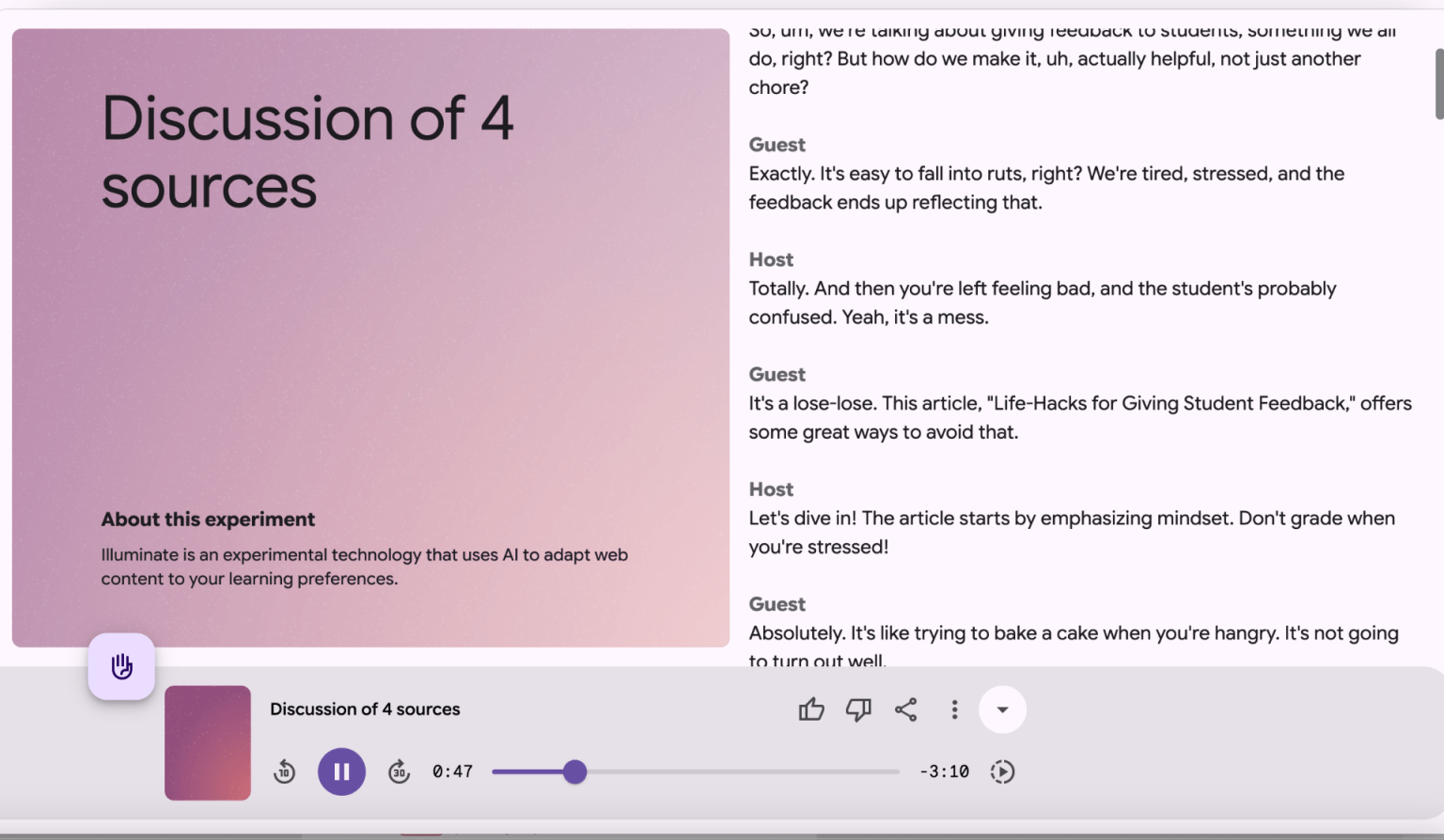
You might use this tool in your class to generate an overview to dense topics that students can listen to and/or read.
Resource to share with students:
GenAI Essentials: Practical AI Skills Across Disciplines (Student-Facing)
https://expand.iu.edu/browse/learningtech/courses/genai-essential-skills
This course, developed by the the Learning Technologies division of University Information Technology Services (UITS) covers:
Prompt Engineering – Crafting precise prompts to generate accurate and useful AI outputs.
Evaluating AI-Generated Content – Assessig reliability, credibility, and biases of AI-produced information.
Ethics and Limitations of GenAI – Understanding responsible AI use, ethical considerations, and potential risks.
Information Literacy in a GenAI Age – Applying verification strategies and library resources to fact-check AI-generated sources.
Studying and Learning with GenAI – Using AI tools for note-taking, summarization, and personalized learning support
Resource for you
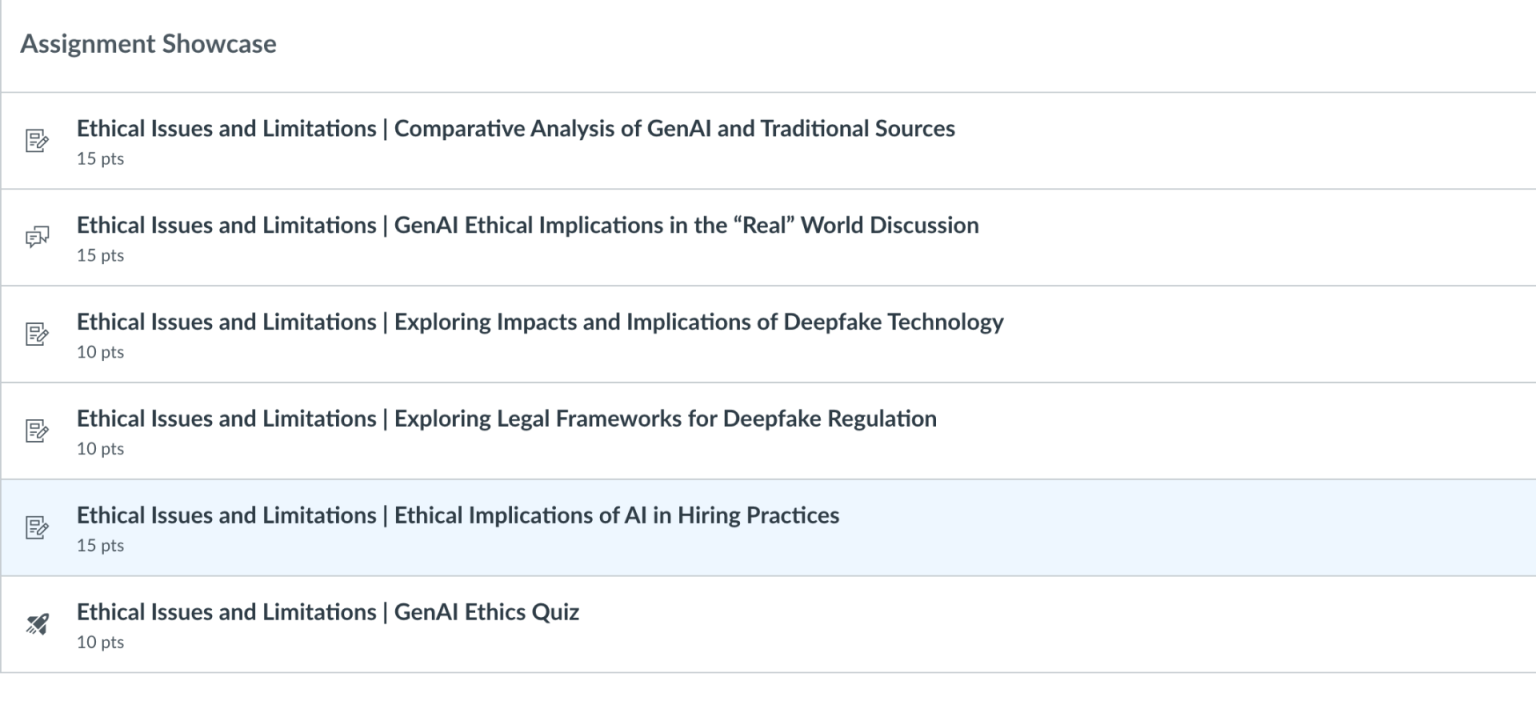
The faculty facing version of the course https://iu.instructure.com/enroll/M7FE9Ecovers the same topics, but also includes assignment templates and rubrics that you can incorporate into your own course: