Beyond the Hype: A Practical GenAI Resource Guide for Faculty in Technical Disciplines

As faculty that teach technical disciplines, you are in a unique position. You aren’t just figuring out how to use Generative AI; you are teaching the students who will build, deploy, and critically evaluate these tools for years to come.

The challenge is twofold:

  • How can you leverage AI to improve your own teaching (e.g., create coding examples, debug assignments, or design better projects)?

  • How can you effectively integrate AI into your curriculum as a core competency (e.g., teach prompt engineering, model limitations, and AI ethics)?

The internet is flooded with AI resources, and it’s impossible to sift through them all. This post is a practical, curated guide to help you find the most useful resources for your courses without the noise.

Start with IU: Key Local Resources

Before diving into the wider web, start with the excellent resources available directly from IU. These provide the foundational context and policies for our community.

Generative AI 101 Faculty Resources
Description: An overview of the GenAI 101 Course available to all at IU. Also includes a syllabus insert that can be used to promote the course to students.

Kelley School of Business “AI Playbook”
Description: A “living guide” developed by the Kelley School for faculty on the use of generative AI in teaching, grading, and research. It outlines shared values and emphasizes that faculty expertise remains central.

When to use: When you want faculty-facing guidance on when and how to use generative AI in assessments, course design, and feedback workflows.

A Quick Starting Point: Three Actionable Resources

If you want to branch out, here are three high-value resources to review in 10 minutes or less.

  1. For Your Curriculum: Teach CS with AI: Resource Hub for Computer Science Educators

    • What it is: A hub specifically for integrating AI into CS courses. It includes lesson plans, project ideas, and pedagogical strategies for teaching AI in computing.

    • When to use: When you’re not just using AI, but actively teaching AI concepts, ethics, or applications within a CS or Informatics course.

  2. For Your Pedagogy: Harvard University:“Teaching with Gen-AI” resources

    • What it is: High-level guidance from Harvard on course design, with excellent case studies and strategies for handling risks like hallucinations and superficial reasoning.

  3. When to use: Use this before the semester starts. It’s perfect for designing your syllabus, setting AI policies, and building responsible use guidelines into your course from day one.

  4. For Your Students (and You): AI for Education: “Effective Prompting for Educators”

    • What it is: A focused guide on how to write better prompts. It includes frameworks (like the “5 S Framework”) that are perfect for teaching students a structured approach to “prompt engineering.”

    • When to use: When you want to move students beyond simple “ask-and-receive” and teach them how to partner with AI to get better, more reliable, and more complex results.

The Deep Dive: A Curated Resource Library

For those with more time, here is a more comprehensive list organized by task.

1. How to Use AI in Your Classroom (Pedagogy & Assignments)

2. Helping Students (and You) Get Better at Prompting

  • AI for Education: Prompt Library

    • Description: A comprehensive, searchable collection of ready-to-use prompts and templates specifically for educators.

    • When to use: When you need quick, plug-and-play prompt templates for lesson plans, student tasks, or administrative work.

  • More Useful Things — Prompt Repository for Educators

    • Description: A repository of prompts for instructor aids and student exercises, curated by researchers Ethan and Lilach Mollick.

    • When to use: When you want tested, inspiring prompt sets, especially for idea generation or in-class activities.

  • Anthropic Prompt Library 

    • Description: Anthropic’s (maker of Claude) public library of optimized prompts for business, creative, and general tasks.

    • When to use: When you want to show students (or yourself) “what good prompting looks like” from an industry leader.

3. How to Teach AI in Your CS/InF Courses (Curriculum & Literacy)

  • Teach CS with AI: Resource Hub for Computer Science Educators

    • Description: A hub dedicated to integrating AI topics, tools, and teaching strategies in CS courses.

    • When to use: Use when teaching a CS course and you want to integrate AI content (topics, labs, projects) directly.

  • metaLAB at Harvard: The AI Pedagogy Project / AI Guide

    • Description: A curated site with assignments and projects to integrate AI in pedagogical practice, focused on critical thinking.

    • When to use: When you are designing a module on AI literacy, critical AI thinking, or assessing students’ interaction with AI tools.

  • Ideeas Lab: Teaching & AI resources

    • Description: A resource hub with teaching materials and tools, particularly aimed at engineering and technical fields.

    • When to use: When you want resources specifically tailored for engineering domains that integrate AI in assignments.

  • AI for Education: “Generative AI Critical Analysis Activities

    • Description: Classroom activities to help students critically examine AI outputs, ethics, and limitations.

    • When to use: When you want to design modules around AI ethics or have students evaluate AI rather than simply use it.

4. Taking it Further: Building Your Own AI Tools

5. Professional Development & Staying Current

  • IBM Skills Build for Educators: College Educators resources

    • Description: A professional development site offering modules and training materials to build AI fluency and integrate digital skills into teaching.

    • When to use: When you want a structured PD path for yourself or want to build a course around AI literacy and workforce readiness.

  • University of Maine: LearnWithAI initiative

    • Description: A practical, “how-to” oriented site for faculty on integrating AI into courses.

    • When to use: Use when you want a site focused on faculty development and practical course integration.

  • Future-Cymbal Notion Page: Shared collection of AI-Teaching Resources

    • Description: A collaboratively curated Notion page of ideas, links, frameworks on AI in education; less “formal guide,” more open resource aggregation

    • When to use: Use when you want to browse a broad, ever-updating set of ideas rather than a polished handbook.

  • AI Resources – Lance Eaton

    • Description: It collects a wide variety of resources for educators around generative AI in the classroom — such as sample syllabus statements, institutional policy templates, teaching ideas, and faculty development materials.

    • When to use: When you are designing or revising your course syllabus and need clear language about how you will (or won’t) allow AI tools in student work.

  • Newsletters for Staying Current:

    • The Rundown -Daily newsletter summarizing AI news across research, policy, and industry.

    • The Neuron – Broad coverage of emerging AI trends and commentary, often with education-adjacent insights.

    • The Batch – Weekly deep dives into AI research, tools, and development—ideal for those following the tech side.

    • The Algorithmic Bridge | Alberto Romero – Thoughtful essays analyzing AI’s social, ethical, and educational impact.

    • Everyday AI Newsletter – Daily newsletter (and accompanying podcast) aimed at making AI accessible to “everyday people” whether educators, professionals, or non-tech specialists.

Conclusion: Start Small, Start Now

You don’t need to redesign your entire curriculum overnight. The best approach is to start small.

Pick one thing to try this month. It could be using a prompt library to help you write a coding assignment, adapting a syllabus policy, or introducing one critical analysis activity in a senior seminar. By experimenting now, you’ll be better prepared to lead your students in this new, AI-driven landscape.

Did I miss a great resource? Leave a comment and let me know!
Pedagogical Tips for the Start of the Semester

The first weeks of the semester are a unique window to shape not only what students will learn, but how they will learn. In STEM courses, where concepts can be abstract, skill levels vary wildly, and technologies evolve quickly, intentional, evidence-based practices can help you set students up for long-term success.

Below are a few strategies with examples and tools you can implement immediately.

Design an Inclusive, Transparent Syllabus

Evidence base: Transparent teaching research (Winkelmes et al., 2016) shows that when students understand the purpose, tasks, and criteria for success, they perform better.

Implementation tips:

  • Purpose statements: For every major assignment, include a short note on why it matters and how it connects to industry or future coursework.
    Example: “This database schema project builds skills in relational modeling, which are directly relevant to backend software engineering interviews.”

  • Clear expectations: Break down grading policies, late work policies, and collaboration guidelines into plain language, avoiding overly technical or legalistic phrasing.

  • Accessibility & flexibility: Link to tutoring labs, office hours, online learning resources, and note-taking tools. Indicate whether assignments can be resubmitted after feedback.

  • Create a one-page “Quick Reference” sheet covering key policies (late work, collaboration, grading)

  • Norm-setting: Add a “Community Norms” section that covers respectful code reviews, how to ask questions in class, and expectations for group work. In large classes, it’s vital to set expectations for respectful online discussions, effective use of the Q&A forum (e.g., checking if a question has already been asked), and guidelines for group work if applicable (e.g., conflict resolution strategies).

Establish Psychological Safety Early

Evidence base: Google’s Project Aristotle (2015) and Edmondson’s (1999) work on team learning show that psychological safety, where students feel safe to take intellectual risks, is essential for high performance.

Implementation tips:

  • Low stakes start: In week one, run short, open-ended coding challenges that allow multiple solutions. Make it clear that mistakes are part of the process.

  • Start with anonymous polls about programming experience to acknowledge the diversity of backgrounds in the room.

  • Instructor vulnerability: Share a personal example of a bug or failed project you learned from. This normalizes challenges in programming. In a large lecture, you can briefly mention common misconceptions students often have with a new concept, and how to navigate them.

  • Model Constructive Feedback: When providing feedback on early assignments (even low-stakes ones), focus on growth and learning. When addressing common errors in a large class, frame it as an opportunity for collective learning rather than pointing out individual mistakes.

  • Multiple communication channels: Set up a Q&A platform (InScribe) where students can post questions anonymously.

Use Early Analytics for Intervention

Evidence base: Freeman et al. (2014) found that early course engagement strongly predicts later success, allowing for timely support.

Implementation tips:

  • Student Engagement Roster (SER): https://ser.indiana.edu/faculty/index.html During the first week of class,  consider explaining the SER to your students and tell them how you will be using it. If students are registered for your class and miss the first class, report them as non-attending in SER.  It will allow outreach that can help clarify their situation. Here’s a sample text you could put into your syllabus:
    This semester I will be using IU’s Student Engagement Roster to provide feedback on your performance in this course. Periodically throughout the semester, I will be entering information on factors such as your class attendance, participation, and success with coursework, among other things. This information will provide feedback on how you are doing in the course and offer you suggestions on how you might be able to improve your performance.  You will be able to access this information by going to One.IU.edu and searching for the Student Engagement Roster (Faculty) tile.

  • Use Canvas Analytics:

  • Identify struggling students. “Submissions” allows you to view if students submit assignments on-time, late, or not at all.

    1. See grades at a glance. “Grades” uses a box and whisker plot to show the distribution of grades in the course.

    2. See individual student data. “Student Analytics” shows page view, participations, assignments, and current score for every student in the course.

  • Track early submissions: Note which students complete the first assignments or attend early labs

  • Personal outreach: Email or meet with students who are slipping to connect them with tutoring, peer mentors, or study groups.

  • Positive nudges: Celebrate early wins (e.g., “I noticed you submitted the optional challenge problem. Great initiative!”).

  • Proactive Outreach (with TA Support): If you identify students who are struggling, send personalized emails offering support and directing them to available resources (e.g., tutoring, office hours with TAs). Consider delegating some of this outreach to TAs in large courses.

  • Announcements Highlighting Resources: Regularly remind the entire class about available support resources, study strategies, and upcoming deadlines through announcements.

Key Implementation Strategies for Success

  • Start Small and Build Don’t attempt to implement all strategies simultaneously. Choose 2-3 that align with your teaching style and course structure, then gradually incorporate additional elements.

  • Leverage Your Teaching Team In large courses, TAs are essential partners. Invest time in training them on consistent feedback practices, student support strategies, and early intervention protocols.

  • Iterate Based on Data Use student feedback, performance analytics, and your own observations to refine your approach throughout the semester. What works in one context may need adjustment in another.

  • Maintain Connection at Scale Even in large courses, students need to feel seen and supported. Use technology strategically to maintain personal connection while managing the practical demands of scale.

Conclusion

By implementing these research-backed strategies, faculty can create learning environments where diverse students thrive, engagement remains high, and learning outcomes improve significantly.

The investment in implementing these practices pays dividends not only in student success but also in teaching satisfaction and course sustainability. As you prepare for the new semester, consider which strategies best align with your course goals and student population, then take the first step toward transforming your large enrollment course into a dynamic, supportive learning community.

Remember: even small changes, consistently applied, can create significant improvements in student learning and engagement. Start where you are, use what you have, and do what you can to create the best possible learning experience for your students.

References

  1. Winkelmes, M. A., Bernacki, M., Butler, J., Zochowski, M., Golanics, J., & Weavil, K. H. (2016). A teaching intervention that increases underserved college students’ success. Peer Review, 18(1/2), 31–36. Association of American Colleges and Universities.

  2. Edmondson, A. C. (1999). Psychological safety and learning behavior in work teams. Administrative Science Quarterly, 44(2), 350–383. https://doi.org/10.2307/2666999

  3. Google Inc. (2015). Project Aristotle: Understanding team effectiveness. Retrieved from https://rework.withgoogle.com/intl/en/guides/understanding-team-effectiveness

  4. Freeman, S., Eddy, S. L., McDonough, M., Smith, M. K., Okoroafor, N., Jordt, H., & Wenderoth, M. P. (2014). Active learning increases student performance in science, engineering, and mathematics. Proceedings of the National Academy of Sciences, 111(23), 8410–8415. https://doi.org/10.1073/pnas.1319030111

Liquid Syllabus


Liquid Syllabus (Pacansky-Brock, 2021, 2017, 2014; Pacansky-Brock et al., 2023, 2021) is a humanizing element that ensures students start a course feeling supported by their instructor. It intentionally provides students with what they need to succeed in week one of a course, including a warm, friendly face. It should be emailed to students the week prior to the start of a course. Rather than a PDF or a page locked inside a learning management system, it is a public, accessible, mobile-friendly website that opens instantly and renders beautifully on a phone. Pacansky-Brock recommends using Google Sites to create such a page: https://sites.google.com/iu.edu/start/home

Students are greeted with a brief, imperfect welcome video at the top; a learning pact that articulates what students can expect from their instructor and what will be expected of them; a list of week one due dates; and tips for success. It is written in a supportive tone and uses asset-based language to encourage growth, cultivate hope, establish expectations for success, and recognize the array of experiences and knowledge students bring to the class as a value that enriches learning. If policies are included, they are written in welcoming, hopeful language. 

The Components (from the Liquid Syllabus Course)

The Liquid Syllabus is intended to be emailed to your students the week before instruction begins. The Liquid Syllabus you design should be part of your overarching goal to ensure your students enter a learning environment that is safe, structured, and predictable. These characteristics support traumatized adult learners. While Pacansky-Brock’s Liquid Syllabus idea uses the idea of a website that students don’t have to log in to, you could:

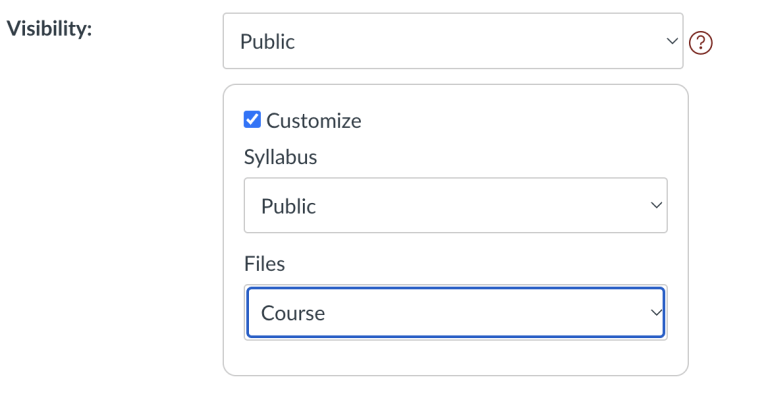
  • Also embed the information onto a Page in Canvas,

Screenshot from Canvas showing how to make your syllabus public.
  • If you are not ready to go all in on a Liquid Syllabus, consider reviewing this video that takes a new look at the Canvas Syllabus tool: 

What does your Liquid Syllabus say to your students?

Your Liquid Syllabus cues students that:

  1. You are a partner in their learning;

  2. Diversity is an asset in a learning environment;

  3. They are valued members of a learning community; 

  4. Success in the course is achievable to all students

What will your Liquid Syllabus include?  

A homepage that contains:

  1. A brief (2-3 minute) welcome video, hosted on YouTube.  The video breaks down the hierarchy between you and your students and cues students that there is a live, human on the other side of the screen who is there to support them.

    • While there are many workflows for hosting videos, Google Sites will only embed videos from YouTube. The video you embed will need to be shared on YouTube as Unlisted (only those with the link can view it) or Public (is retrievable in web searches and publicly visible on your YouTube channel).


  2. How This Course Works section that clearly communicates where and when (if applicable) students are expected to participate in your course. This section should clearly describe how the course is organized.


  3. My Teaching Philosophy section that is student-centered, includes supportive language and promotes confidence while engaging in rigor. Conveys high expectations while incorporating information about how you will support students to achieve academic success. 


  4. A Learning Pact that lists expectations that your students can expect from you and that you will expect from them. The pact cues students that you will play an active role in supporting their learning.


  5. How to Get Your Questions Answered section. This includes your instructor communication policy that clearly lets students know how they should contact you and what your response time is.


Additional pages that may include:

  1. Course Essentials (course description, outcomes, textbook, listed of other required materials.)


  2. Grading - A clear and transparent explanation about how grading works in your course. 


  3. Policies: This page includes your campus policies that are expected to be included in all course syllabi. Often, the language used in our institutional policies often informed by a deficit-based mindset about our students. Read your campus policies critically and ask yourself if they use deficient, intimidating, unwelcoming messages. If you identify these phrases, adapt them with equity-minded language. For example:

    • Instead of "Mandatory," begin with, "To be successful ..."

    • Instead of "You will be dropped from the course"..., begin with "I will check in on you if you forget to participate."

    • Instead of "Rigorous exceptions", begin with, “You really want to look out for X, and here’s a strategy so that it doesn’t happen.”

    • Instead of "Requirements," begin with, "Tips for success"

    • Instead of "No Excuses," begin with, "Search for solutions and keep an open line of communication with me"

    • Instead of "It is your responsibility to," begin with "Confusion is normal. Contact me if you have questions.


  4. ResourcesA list of institutional resources available for your students to support their academic success, and mental/physical well-being. This list includes links to each resource webpage so students can easily get more information.

Language Samples (from the Liquid Syllabus Course)

So what do we mean by "welcoming language"? Below are a few examples of common syllabus topics provided in a welcoming and an unwelcoming tone. Please take a few moments to consider these examples. Welcoming language includes contextual cues about why a particular policy or expectation is provided.  It also cues students that "taking a course" or "completing a course" is about learning and learning is a process of growth and development. 


Office Hours

Welcoming: I will hold an online office hour each week on Thursdays from 4-5pm. I welcome you to contact me outside of that time and will be happy to arrange a different meeting time in Zoom or via phone that accommodates both of our schedules.
Unwelcoming: I will hold one online office hour each week. Email me if you have questions but are unable to attend. We can find another time.  

Course Goals

Welcoming: Below is a list of specific skills this course is designed to guide you towards obtaining. Each assignment you complete in this course will contribute to your growth towards meeting these goals. After this class has ended, it is my hope that you will use these skills in your daily life.
Unwelcoming: Below is a list of specific skills you should obtain in this course. If you are motivated enough, you will use the skills in your daily life.

Participation

Welcoming:Participation involves logging in to our course, navigating through the content pages in a module, completing the readings and videos, participating in discussions and other activities, and submitting assignments/quizzes/exams. Your participation is not only an important part of your learning, it will also contribute to the learning of your peers. As members of our learning community, each of us has a responsibility to create an environment in which we can all learn from each other. 
Unwelcoming:Regular participation in this course is required. It is important to engage in our course content in order to do well in this course. 

To learn more about Liquid Syllabus, view this 3 minute video: