Highlights from EDUCAUSE 2025

The EDUCAUSE Annual Conference took place last week in Nashville, TN.  

It advertises itself as "THE event where professionals and technology providers from around the world gather to network, share ideas, grow professionally, and discover solutions to today’s challenges. It’s the largest gathering of your peers…people you can relate to, learn from, and stay connected to throughout the year".

It’s not too late to register for the online version of the conference that takes place later this week (and will feature sessions from the in-person conference in Nashville as well as exclusive new content): https://events.educause.edu/annual-conference/attend/online-conference-registration (IU is an institutional member of EDUCAUSE; you can access any of their public facing sites using your IU credentials through the SSO option if asked).

Below are a few of the featured and general session recordings from the live face-to-face meeting in Nashville. 

_ Unmasking AI_ Protecting What Is Human in a World of Machines


Presenter: Joy Buolamwini
Abstract: Groundbreaking researcher, Dr. Joy Buolamwini, shares an illuminating investigation into the harms and biases of artificial intelligence. In this session, Dr Joy will explore AI in decision-making, aligning AI with fairness and organizational values and leading boldly in an AI-driven world.

Augmented Intelligence


Presenter: Jules White
Abstract: Generative AI represents a new paradigm in computing—one that centers human ideas as the starting point for computational action. Rather than relying on traditional programming, this approach allows people to express complex goals in natural language, making it possible to “compute on thought” across disciplines. This talk explores how generative AI reshapes our relationship with technology by enabling systems that respond to intent, refine outputs through dialogue, and integrate diverse tools and data. The result is a more interdisciplinary model of innovation where domain experts, creatives, and technologists collaborate through shared language. At its core, this shift is about augmented intelligence: amplifying human creativity, reasoning, and problem-solving—not replacing it—so that computing becomes a more fluid extension of human thought.


The Belonging Imperative


Presenter: Keith McIntosh
Abstract: Belonging is no longer optional — it is the defining imperative for today’s leaders! In a time when retention, engagement, and culture are under strain, leaders must intentionally design environments where people feel seen, supported, and connected. This session, led by Dr. Keith W. McIntosh, a nationally recognized higher education CIO, award-winning leader, scholar, practitioner, and thought partner on inclusive leadership and belonging, positions leaders as architects of belonging, responsible for shaping the systems, spaces, and practices that determine whether employees thrive or disengage. We’ll discuss the science of belonging and its connection to well-being, performance, and retention, while also highlighting real-world examples of leaders who embody these values. Research consistently shows that employees who feel a strong sense of belonging are more engaged, more loyal, and more productive. We’ll explore why belonging must sit alongside strategy and innovation on every leader’s agenda, and how it creates legacies that outlast titles or tenures. Participants will leave with a deeper understanding and practical strategies to embed belonging into daily leadership practices, building communities where people want to stay, grow, and contribute.

Resilient Campuses in Turbulent Times


Presenter: Freeman Hrabowski
Abstract: Higher education professionals are experiencing an unprecedented period of turbulence, resulting from significant political, demographic, cultural, and technological changes. These broad forces range from declining enrollment to shifts in employment, federal and state policy changes, and technological changes, including the ascent of generative AI. Rather than give into despair, institutional leaders, and the teams they lead can instead choose resilience, the ability to remain focused and effective in the face of these and other challenges. To address these ongoing challenges, institutions must become increasingly effective in the use of data, analytics, and AI to increase student success and ensure that people are the highest priority. The talk will highlight the importance of vision, openness, resilience, courage, passion, and hope.

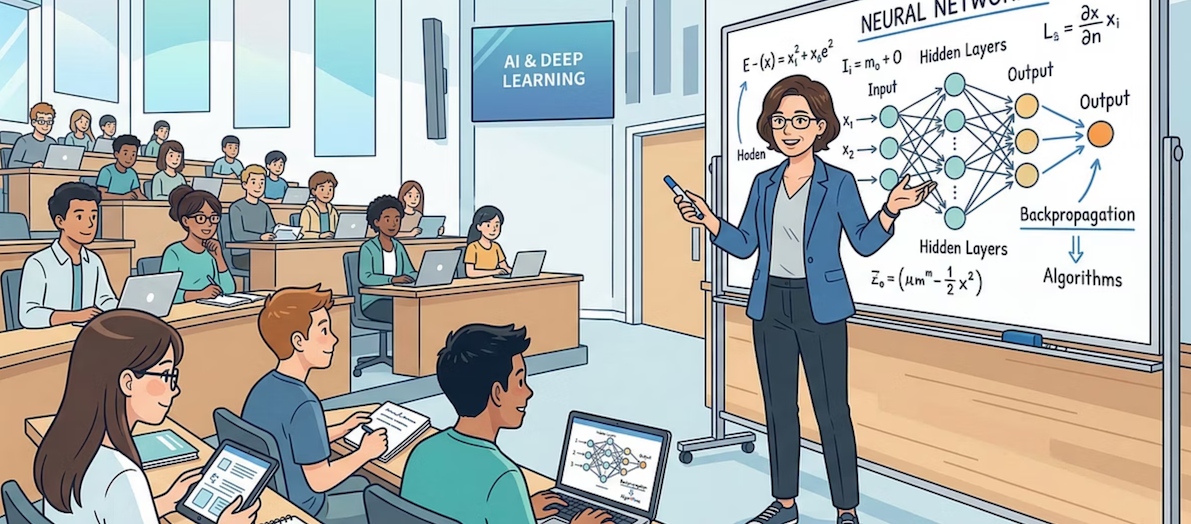
Beyond the Hype: A Practical GenAI Resource Guide for Faculty in Technical Disciplines

As faculty that teach technical disciplines, you are in a unique position. You aren’t just figuring out how to use Generative AI; you are teaching the students who will build, deploy, and critically evaluate these tools for years to come.

The challenge is twofold:

  • How can you leverage AI to improve your own teaching (e.g., create coding examples, debug assignments, or design better projects)?

  • How can you effectively integrate AI into your curriculum as a core competency (e.g., teach prompt engineering, model limitations, and AI ethics)?

The internet is flooded with AI resources, and it’s impossible to sift through them all. This post is a practical, curated guide to help you find the most useful resources for your courses without the noise.

Start with IU: Key Local Resources

Before diving into the wider web, start with the excellent resources available directly from IU. These provide the foundational context and policies for our community.

Generative AI 101 Faculty Resources
Description: An overview of the GenAI 101 Course available to all at IU. Also includes a syllabus insert that can be used to promote the course to students.

Kelley School of Business “AI Playbook”
Description: A “living guide” developed by the Kelley School for faculty on the use of generative AI in teaching, grading, and research. It outlines shared values and emphasizes that faculty expertise remains central.

When to use: When you want faculty-facing guidance on when and how to use generative AI in assessments, course design, and feedback workflows.

A Quick Starting Point: Three Actionable Resources

If you want to branch out, here are three high-value resources to review in 10 minutes or less.

  1. For Your Curriculum: Teach CS with AI: Resource Hub for Computer Science Educators

    • What it is: A hub specifically for integrating AI into CS courses. It includes lesson plans, project ideas, and pedagogical strategies for teaching AI in computing.

    • When to use: When you’re not just using AI, but actively teaching AI concepts, ethics, or applications within a CS or Informatics course.

  2. For Your Pedagogy: Harvard University:“Teaching with Gen-AI” resources

    • What it is: High-level guidance from Harvard on course design, with excellent case studies and strategies for handling risks like hallucinations and superficial reasoning.

  3. When to use: Use this before the semester starts. It’s perfect for designing your syllabus, setting AI policies, and building responsible use guidelines into your course from day one.

  4. For Your Students (and You): AI for Education: “Effective Prompting for Educators”

    • What it is: A focused guide on how to write better prompts. It includes frameworks (like the “5 S Framework”) that are perfect for teaching students a structured approach to “prompt engineering.”

    • When to use: When you want to move students beyond simple “ask-and-receive” and teach them how to partner with AI to get better, more reliable, and more complex results.

The Deep Dive: A Curated Resource Library

For those with more time, here is a more comprehensive list organized by task.

1. How to Use AI in Your Classroom (Pedagogy & Assignments)

2. Helping Students (and You) Get Better at Prompting

  • AI for Education: Prompt Library

    • Description: A comprehensive, searchable collection of ready-to-use prompts and templates specifically for educators.

    • When to use: When you need quick, plug-and-play prompt templates for lesson plans, student tasks, or administrative work.

  • More Useful Things — Prompt Repository for Educators

    • Description: A repository of prompts for instructor aids and student exercises, curated by researchers Ethan and Lilach Mollick.

    • When to use: When you want tested, inspiring prompt sets, especially for idea generation or in-class activities.

  • Anthropic Prompt Library 

    • Description: Anthropic’s (maker of Claude) public library of optimized prompts for business, creative, and general tasks.

    • When to use: When you want to show students (or yourself) “what good prompting looks like” from an industry leader.

3. How to Teach AI in Your CS/InF Courses (Curriculum & Literacy)

  • Teach CS with AI: Resource Hub for Computer Science Educators

    • Description: A hub dedicated to integrating AI topics, tools, and teaching strategies in CS courses.

    • When to use: Use when teaching a CS course and you want to integrate AI content (topics, labs, projects) directly.

  • metaLAB at Harvard: The AI Pedagogy Project / AI Guide

    • Description: A curated site with assignments and projects to integrate AI in pedagogical practice, focused on critical thinking.

    • When to use: When you are designing a module on AI literacy, critical AI thinking, or assessing students’ interaction with AI tools.

  • Ideeas Lab: Teaching & AI resources

    • Description: A resource hub with teaching materials and tools, particularly aimed at engineering and technical fields.

    • When to use: When you want resources specifically tailored for engineering domains that integrate AI in assignments.

  • AI for Education: “Generative AI Critical Analysis Activities

    • Description: Classroom activities to help students critically examine AI outputs, ethics, and limitations.

    • When to use: When you want to design modules around AI ethics or have students evaluate AI rather than simply use it.

4. Taking it Further: Building Your Own AI Tools

5. Professional Development & Staying Current

  • IBM Skills Build for Educators: College Educators resources

    • Description: A professional development site offering modules and training materials to build AI fluency and integrate digital skills into teaching.

    • When to use: When you want a structured PD path for yourself or want to build a course around AI literacy and workforce readiness.

  • University of Maine: LearnWithAI initiative

    • Description: A practical, “how-to” oriented site for faculty on integrating AI into courses.

    • When to use: Use when you want a site focused on faculty development and practical course integration.

  • Future-Cymbal Notion Page: Shared collection of AI-Teaching Resources

    • Description: A collaboratively curated Notion page of ideas, links, frameworks on AI in education; less “formal guide,” more open resource aggregation

    • When to use: Use when you want to browse a broad, ever-updating set of ideas rather than a polished handbook.

  • AI Resources – Lance Eaton

    • Description: It collects a wide variety of resources for educators around generative AI in the classroom — such as sample syllabus statements, institutional policy templates, teaching ideas, and faculty development materials.

    • When to use: When you are designing or revising your course syllabus and need clear language about how you will (or won’t) allow AI tools in student work.

  • Newsletters for Staying Current:

    • The Rundown -Daily newsletter summarizing AI news across research, policy, and industry.

    • The Neuron – Broad coverage of emerging AI trends and commentary, often with education-adjacent insights.

    • The Batch – Weekly deep dives into AI research, tools, and development—ideal for those following the tech side.

    • The Algorithmic Bridge | Alberto Romero – Thoughtful essays analyzing AI’s social, ethical, and educational impact.

    • Everyday AI Newsletter – Daily newsletter (and accompanying podcast) aimed at making AI accessible to “everyday people” whether educators, professionals, or non-tech specialists.

Conclusion: Start Small, Start Now

You don’t need to redesign your entire curriculum overnight. The best approach is to start small.

Pick one thing to try this month. It could be using a prompt library to help you write a coding assignment, adapting a syllabus policy, or introducing one critical analysis activity in a senior seminar. By experimenting now, you’ll be better prepared to lead your students in this new, AI-driven landscape.

Did I miss a great resource? Leave a comment and let me know!

Possible ways to improve attendance

One of the most frequent concerns I hear is, “My students just aren’t coming to class.” With so much content available online, recorded lectures at their fingertips, and the sense of distance that can come with large classes, this challenge is becoming more common and more complex. In this post, I will look at some of the more popular reasons reported for students not attending class and share practical, evidence-based ways to re-engage students in the classroom.

The Anonymity Epidemic: When Students Feel Like Just Another Face

Many students, particularly in large enrollment courses, feel anonymous. They don’t believe their individual presence makes a difference, leading to a disengagement from the classroom community. This isn’t just a large-class problem; it arises when students lack meaningful connections with instructors, TAs, or even their peers. Overcoming this anonymity is key to fostering a sense of responsibility and belonging.

Strategies to Combat Anonymity:

  • Be Present Before Class: Arriving early to chat informally with students is a simple yet powerful way to build rapport. Ask about their weekend, recent movies, or even their experience with the last assignment. These small gestures humanize you and create a connection.

  • Active Engagement is Key: Design activities that actively involve students with the material. Pose intriguing questions, facilitate brief peer discussions, or utilize classroom response systems like TopHat https://uits.iu.edu/tophat/index.html to “vote” on responses. This transforms passive listening into active participation, fostering an intellectual community.

  • Learn Their Names (or Try): Even the attempt to learn student names is deeply appreciated. Ask for names when students speak and use them in your response. Consider using a photo roster from Canvas to help you put names to faceshttps://toolfinder.iu.edu/tools/iu-photo-roster. A study in a high-enrollment biology course found that students’ perception of their instructor knowing their name was highly correlated with a sense of belonging, even though the instructors didn’t know every student’s name https://www.lifescied.org/doi/full/10.1187/cbe.16-08-0265 This suggests that the effort and intention behind using a student’s name are just as important as the memorization itself. For more strategies see: https://teachinginhighered.com/podcast/how-to-learn-students-names/

  • Cultivate Peer Connections: Encourage students to get to know each other. In in Relationship-Rich Education: How Human Connections Drive Success in College(Felten & Lambert, 2020) https://iucat.iu.edu/catalog/19430355mention that students benefit when they are guided in how to connect, not just told to “work together.” On the first day, have them introduce themselves to those around them. Additional strategies might include teaching collaboration skills, establishing norms for group work, or prompting reflection on what makes a partnership effective. If you use group work, rotate group members throughout the semester. Periodically have students shift seating to broaden their peer interactions.

  • Personalized Feedback (Even in Large Classes): While challenging, finding ways to provide even small amounts of personalized feedback on assignments can significantly reduce feelings of anonymity. This could be through targeted comments on a rubric or brief, individualized responses to discussion forum posts. In large classes, it’s impossible to give every student a paragraph of detailed feedback each week, but you can make feedback feelpersonal by thinking in layers. I like to frame it as macro, meso, and micro feedback. At the macro level, I share short announcements summarizing class-wide trends; what students are doing well, what’s tripping them up, and a few standout examples. At the meso level, I provide targeted feedback to lab sections, project teams, or discussion groups that speaks directly to their shared progress. Then at the micro level, I use rubrics and comment banks to individualize comments just enough to sound human…adding a student’s name or referencing something specific from their work. It’s not about writing more; it’s about being intentional with how students experience the feedback they receive.

The “Why Bother?” Dilemma: Lack of Incentive, Relevance, and Engagement

Students often skip lectures if they perceive the content as readily available elsewhere, not directly relevant to their goals, or simply boring.


Strategies to Create Incentive and Relevance:

  • Incentivize Attendance: Leverage students’ natural focus on grades. Make attendance a component of the grade, or administer short, low-stakes quizzes at the beginning of class using tools like Canvas or TopHat.

  • Design Slides to Drive Presence:Explicitly state that your posted slides are incomplete. Design them as skeletal frameworks, requiring students to annotate and fill in critical explanations and examples during lecture. This creates a clear value proposition for attending.

  • Debunk the “Notes from a Peer” Myth:Directly address the inadequacy of relying solely on peer notes or even AI-generated summaries. Emphasize that context, instructor insights, and the organic flow of a live lecture cannot be fully replicated.

  • Connect to Their World: Embed examples, applications, and topics that resonate with students’ fields of study and current cultural interests. Utilize Canvas Course Analytics, Reports and Dashboardsand/or  pre-course surveys to understand your student demographics and tailor examples accordingly.

  • Pique Interest from the Start: Begin lectures with a challenging question, an intriguing anecdote, or a real-world problem that immediately grabs attention and motivates sustained engagement.

  • Convey Your Enthusiasm: Your passion for the subject is contagious! Share personal stories, recent discoveries, and your excitement for the discipline. Voice and body language naturally convey this enthusiasm.

Overcoming Information Overload and Misaligned Expectations

Sometimes, students skip because they feel overwhelmed, confused by lecture goals, or perceive the lecture as redundant to textbook material.

Strategies for Clarity and Complementary Learning:

  • Chunk Your Lectures & Re-engage:Recognize that typical attention spans are 10-20 minutes. Plan your lectures in shorter chunks, incorporating varied activities every 15-20 minutes to re-engage attention (e.g., questions, visuals, demonstrations, group work, videos). Consider attending the upcoming Active Learning Block Party for Large Classrooms sponsored by CITL for engagement ideas.

  • Complement, Don’t Reiterate, the Textbook: Use class time to expand on readings, provide alternative perspectives, facilitate problem-solving, or have students generate their own examples. The lecture should offer something the textbook doesn’t.

  • Provide Unique Experiences: Bring in guest speakers, conduct live demonstrations of code or hardware, or share cutting-edge research and innovations that students wouldn’t encounter elsewhere that connect with course content.

  • State Your Goals Clearly: Explicitly articulate the learning objectives for each lecture. Use these goals as “mileposts” to help students track their progress and understand the desired outcomes.

  • Share the Organization: Provide an outline, agenda, or visual representation of the lecture’s structure. Don’t assume novices will automatically see the logical connections among concepts.

  • Encourage Support Services: If you identify students struggling with academic or non-academic demands, refer them to appropriate support services like Academic Development, the Counseling Center, or Student Health.  Student Resource Slideshow.pptx

  • Support Language Learners: For students whose first language is not English, refer them to resources like the Office of International Services which offers drop-in English tutorials for second language students https://ois.iu.edu/get-involved/english-tutorials/index.html

  • Provide Recordings (Strategically):While recordings can reduce attendance, they are a valuable accessibility tool. If you record, emphasize that the recording is a supplement for review or for those with legitimate absences, not a substitute for live engagement. Consider how you might make the live session distinctly more valuable than the recording (e.g., interactive elements through PlayPosithttps://uits.iu.edu/services/technology-for-teaching/instruction-and-assessment-tools/playposit/index.html, Q&A).

The Power of Visuals and Storytelling

In fields like Computer Science and Engineering, abstract concepts can be difficult to grasp. Visuals and real-world narratives can significantly enhance comprehension and engagement.

Additional Tips:

  • Integrate Visualizations: When explaining complex algorithms, data structures, or system architectures, use diagrams, flowcharts https://miro.com/, and animations  Show, don’t just tell. Consider generating some of these visualizations on the fly with your students!

  • Tell Stories of Impact: Frame technical concepts within the context of real-world problems they solve or innovative applications. How did this algorithm enable a new technology? What societal problem does this data science technique address?

  • Live Coding Demonstrations: For programming or data manipulation courses, live coding is incredibly effective. It allows students to see the process, observe debugging strategies, and ask questions in real-time. Make sure to slow down and explain your thought process.

  • Guest Speakers from Industry: Invite professionals from relevant industries to share how the concepts taught in class are applied in their day-to-day work. This provides tangible career relevance.

By adopting these evidence-based strategies, faculty can transform their lectures from passive information dissemination into vibrant, engaging learning experiences that students genuinely want to attend. The goal isn’t just to fill seats, but to foster deeper learning and a stronger connection to the academic community.


Building a Framework for Academia-Industry Partnerships and AI Teaching and Learning Podcasts

In March, I shared the an overview of the  “Practitioner to Professor (P2P)‘ survey that the CRA-Education / CRA-Industry working group analyzed. They recently released a report titled Breadth of Practices in Academia-Industry Relationships which explores a range of engagement models from research partnerships and personnel exchanges to master agreements and regional innovation ecosystems.

Key Findings and Observations

The report organizes its findings from the workshop into three categories: observations, barriers, and common solutions:

  • Observations A major theme was the critical need to embed ethical training into AI and computing curricula through both standalone courses and integrated assignments. It was noted that while academia is best suited to drive curriculum development, input from industry is essential to ensure the content remains relevant to real-world applications.

  • Barriers Key barriers to successful collaboration were identified, including cultural differences and misconceptions between academic and industry partners. For instance, industry’s focus on near-term goals can clash with academia’s long-term vision. A significant practical barrier is the prohibitive cost of cloud and GPU hardware, which limits students’ experience with cloud and AI development tools.

  • Common Solutions Effective solutions include the fluid movement of personnel between organizations through internships, co-ops, sabbaticals, and dual appointments. Streamlined master agreements at the institutional level also help facilitate research collaborations by reducing administrative friction.

Strategies for Research Collaboration

The report outlines a multi-level approach to enhancing research partnerships:

  • Individuals Faculty and industry researchers can initiate relationships through internal seed grants, sabbaticals in industry, dual appointments, and by serving on industry advisory boards.

  • Departments Departmental leaders can foster collaboration by strategically matching faculty expertise with industry needs, offering administrative support, and building a strong departmental brand with local industry.

  • University Leadership Senior leaders can address systemic barriers by creating a unified, institution-wide strategy, developing flexible funding models, and implementing master agreements to streamline partnerships.

  • Regional Ecosystems The report emphasizes the importance of universities partnering with local industries and startups to build thriving regional innovation ecosystems, which can drive economic development and secure government support.

Education and Workforce Development 

With the rise of generative AI, the report highlights an urgent need for universities and industry to partner on education.

  • Curriculum Adaptation Computing curricula need to be updated to include foundational concepts in DevOps and scalable systems, which are often not part of the core curriculum. While AI literacy is essential, the report suggests a balance, with 80% of instruction remaining focused on core computer science skills. Ethical reasoning should be integrated throughout the curriculum, not just in a single course.

  • Workforce Programs To meet industry demands for job-ready graduates, the report advocates for university-industry partnerships in co-op programs, internships, and capstone projects. It also points to the need for universities to offer flexible programs like certificates and online courses to help upskill and reskill the existing workforce.

Recommendations

The report concludes with five main recommendations for universities, industry, and government:

  1. Enhance research impact by combining academia’s long-term vision with real-world problems from industry. This can be achieved by embedding faculty in industry and industry researchers in universities.

  2. Leverage the convening power of universities to build partnerships that benefit the wider community, using mechanisms like industrial advisory boards and research institutes.

  3. Accelerate workforce development by aligning university programs with regional innovation ecosystems and having industry invest in talent through fellowships and internships.

  4. Deliver industry-relevant curricula grounded in core computing principles, and collaborate with industry experts to co-design courses in high-demand areas like AI and cloud computing.

  5. Establish new incentives and metrics to recognize and reward faculty for their contributions to industry partnerships in promotion and tenure evaluations.

AI Teaching and Learning Podcasts:What If College Teaching Was Redesigned With AI In Mind?

https://learningcurve.fm/episodes/what-if-college-teaching-was-redesigned-with-ai-in-mind

A former university president is trying to reimagine college teaching with AI in mind, and this year he released an unusual video that provides a kind of artist’s sketch of what that could look like. For this episode, I talk through the video with that leader, Paul LeBlanc, and get some reaction to the model from longtime teaching expert Maha Bali, a professor of practice at the Center for Learning and Teaching at the American University in Cairo.

The Opposite of Cheating Podcast

https://open.spotify.com/show/5fhrnwUIWgFqZYBJWGIYml

(Produced by the authors of the book with the same name) the podcast shares the real life experiences, thoughts, and talents of educators and professionals who are working to teach for integrity in the age of AI. The series features engaging conversations with brilliant innovators, teachers, leaders, and practitioners who are both resisting and integrating GenAI into their lives. The central value undergirding everything is, of course, integrity!

Teaching in Higher Ed podcast, “Cultivating Critical AI Literacies with Maha Bali”.

https://teachinginhighered.com/podcast/cultivating-critical-ai-literacies/

In the episode, host Bonni Stachowiak and guest Maha Bali, a Professor of Practice at the American University in Cairo, explore the complexities of integrating artificial intelligence into higher education.

Bali advocates for a critical pedagogical approach, rooted in the work of Paulo Freire, urging educators to actively experiment with AI to understand its limitations and biases. The discussion highlights significant issues of cultural and implicit bias within AI systems. Bali provides concrete examples, such as AI generating historically inaccurate information about Egyptian culture, misrepresenting cultural symbols, and defaulting to stereotypes when prompted for examples of terrorism.

The Actual Intelligence podcast

speakswith Dr. Robert Neibuhr from ASU regarding his recent article in Insider Higher Ed: “A.I and Higher Ed: An Impending Collapse.” Full Podcast: https://podcasts.apple.com/us/podcast/is-higher-ed-to-collapse-from-a-i/id1274615583?i=1000725770519

with Bill Gates having just said that A.I. will replace most teachers within ten years, it seems essential that professional educators attune to the growing presence of A.I. in education, particularly its negative gravitational forces.