Helping students engage in lecture

In an article for the Chronicle of Higher Education, James Lane (author of Small Teaching) explains:

“The opening five minutes offer us a rich opportunity to capture the attention of students and prepare them for learning. They walk into our classes trailing all of the distractions of their complex lives — the many wonders of their smartphones, the arguments with roommates, the question of what to have for lunch. Their bodies may be stuck in a room with us for the required time period, but their minds may be somewhere else entirely.

It seems clear, then, that we should start class with a deliberate effort to bring students’ focus to the subject at hand.”

One strategy he advocates for is:

Reactivate what they learned in previous courses. Plenty of excellent evidence suggests that whatever knowledge students bring into a course has a major influence on what they take away from it. So a sure-fire technique to improve student learning is to begin class by revisiting, not just what they learned in the previous session, but what they already knew about the subject matter.

One way you can do this is by posing simple questions at the beginning of class followed by a few minutes of discussion: “Today we are going to focus on X. What do you know about X already? What have you heard about it in the media, or learned in a previous class?”  – Lang explains that this helps students:

  • “connect to your course material, so when they encounter new material, they will process it in a richer knowledge context”

  • It also helps you understand what preconceptions and misconceptions they may have about material.

Weimer (2018) suggests you ask questions about material previously covered. The strategies she suggests include:

  • Resolutely refuse to answer the question. That’s exactly what students want you to do.

  • Give them a hint. “We talked about this when we were talking about X?” “Check your notes for October 20. You might find the answer there.”

  • Be patient. It takes time to retrieve what you’ve just learned and just barely understand.

  • Still no response? Tell them, that’s the question you’ll start with tomorrow and if they don’t have an answer then, they’ll next see that question on the exam.

Have students review previously presented content.

  • “Take three minutes to review your notes from November 1. Do you have anything in your notes that doesn’t make sense to you now?” If someone offers an example, encourage other students to respond. “Help Shandra out. What do the rest of you have in your notes about this?” Conclude by giving them another minute to write more in their notes if they need to.

  • At the beginning or end of the class session, give students the chance to review notes from a designated day with someone sitting nearby. Encourage them to trade notes and then talk about what they do and don’t have that’s the same. What do they both consider the most important material in that set of notes?

Use the text in class

  • If the text offers a good definition, description, graphic, example, sample problem, study question, or something else, tell students you have it highlighted in your text. Ask if they’ve highlighted it in theirs. Then inquire about reasons why it might be highlighted.

  • Identify a key concept discussed several days ago or in a previous module. Start with what’s in their notes. Then ask about text material on the concept. Where’s it located in the text? What’s the relationship between what’s in the text and what was presented? Does the text add new information? Does it provide a different kind of explanation? Does it offer more examples?

Roberto (2021) recommends Creating Meaningful Prework:

Students will also come to class more prepared to contribute if you set the stage with effective prework activities. Reading assignments alone aren’t sufficient, and grades are not enough to motivate. We must broaden our perspective and think creatively about what prework is. The tasks we give students should answer the “So what?” question and require them to grapple with the material in some way, so they’re not blank slates when they get to class. It’s all about preparing them to engage. I’ve found the following tasks to be more effective than assigned readings; ask them to do some of the following:

  • Watch a ShowMe tutorial. This is an Apple app, though there are similar apps for other platforms. ShowMe turns your tablet into a whiteboard so that you can draw and bring in different colors and images as you record your voice. It doesn’t have to be fancy. The key is making a short video that breaks down a concept and readies students to apply that information. We need to get away from posting lengthy lecture videos and expecting students to sit through them.

“Articulating the ‘So what?’ before you hand out an assignment—and including compelling examples that reinforce the subject’s relevance—motivates students to do the work well, not just for the grade.”

  • Listen to an Audacity podcast. With this free software (also available at IUWare), you can record short audio podcasts that students can listen to on the go. My podcasts include a few simple bullet points and reviews of key topics.

  • Conduct interviews. Give students something active to do with the material. Sometimes the most effective prework is having them go out and be anthropologists, to observe or interview people about the topic. It could be someone on campus, out in the community, or even in their own homes.
Strategies for Course Communications with Teaching Tools

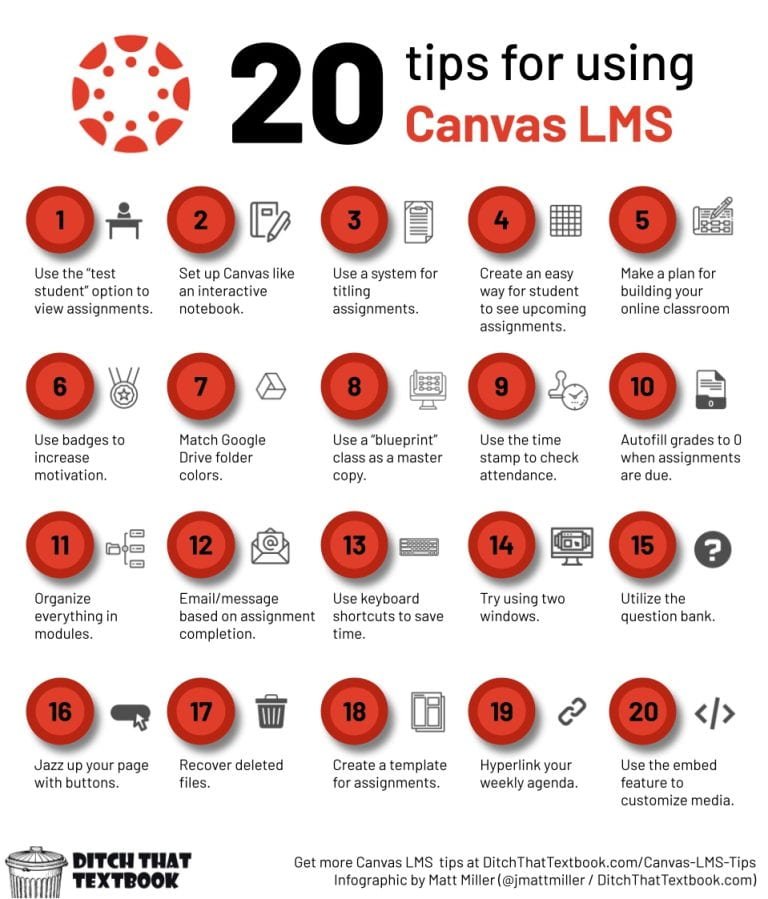
Creating dialogue between your students can be a challenging yet fundamental part of teaching. Effective communication can help to build and foster a safe learning environment where students can thrive, prosper and learn. In addition to the rhetorical moves you may use to structure your speaking style and structure your communication, you can also develop a plan for various ways you use technology to deliver your message. Develop a strategy for when and how your students will communicate back to you as well as use instructional technologies in your class. Having regular two-way communication that invites all students to participate is essential for building trust (How to Make Your Teaching More Inclusive, 2019). Decide when regular, expected communications need to happen, and how you can best fit these duties into your own schedule. The table below (modified from U of Wisconsin and Instructure), provides various examples of communication strategies and when to apply them in your course.

Table of communication strategies to use with students
When Communication Strategy Example Technologies Used*
Prior to the course start Introduce yourself to students Add your photo and a short bio to the course welcome page, and link students here from a welcome email.
During the first week Help students meet each other and "break the ice" Ask students to update their Canvas profile, and use Name Coach to help learn how to pronounce their names
Learn more about who students are and their needs for learning Assign an anonymous survey in Canvas, Google Forms or Qualtrics that asks students to share questions or concerns they have about the course. View their images through the Class Roster
Ongoing weekly Reach out to "inactive" students in Canvas Use "Message students who..." to contact any students who haven't completed the Discussion or Survey in the first week.
Provide a place to ask general questions Create a Discussion board in Canvas that's available throughout the course and intended for general questions. Create a Teams or Slack group for your class
Give students low stake assessments to help master material Conduct formative assessment for instant feedback during a presentation in Top Hat. Create low stakes automated quizzes in Canvas that students can complete and receive feedback on course material
Kick off each unit or week Post an Announcement to start each week that connects the prior week's activities to the upcoming activities. Please note you can preset announcements for each week with reminders of upcoming test or due dates for assignments, or tips on how to prepare for class.
Provide regular opportunities to discuss course content Ask students questions to formatively assess how well they learned material through Top Hat. Use Discussions to ask deep dive questions around course content.    
Provide regular opportunities to ask individual questions Hold office hours, either drop-in or by appointment, Face-to-Face, in Teams or by Zoom  
Provide timely feedback to students Students are introduced to the Rubric as part of the activity directions. Instructor uses the Rubric as part of their feedback, and encourage or require students to revise their submitted work based on the feedback. Instructors use Speedgrader to provide students with audio or video feedback​, and/or students use peer reviews to provide audio or video feedback to their peers.  


Ideas for the first day of class

The following are a few ideas collected from a variety of sources on activities first the first day of class.

From (Weimer, 2017)

  • If it’s a course where students don’t think they know anything about the content, start by dissecting the course title. For each keyword, ask students to submit the first word or phrase that comes to mind to Top Hat and create a Wordle. Point out the ideas that are correct.

  • Share some information that will personalize you – your teaching experience, the reason you entered your discipline, an anecdote from your undergraduate learning days. If you have graduate teaching assistants, introduce them, and let them tell something about themselves

  • Play a brief a slideshow or a collage of pictures that shows who you are without prior to the start of class—pictures of you at work, in the lab or library, at home, with kids and pets, you in college, grade school, etc. The pictures can be interspersed with favorite quotes or some pithy sayings about learning.  Run the slide show as students are arriving or make it available online before the course begins. A slide show introduction gives you the opportunity to invite students to send you or share with the class a couple of their own introductory pictures

  • Did you ever take the course you are about to teach or one with closely related content when you were a student? Start the class by sharing some of your experiences as a student in the course. What were you worried about? What do you remember about the course? Did you do well or not so well? What would you do differently if you were taking the course now?

 From Waltje & Evans (2017)

  • Combine an attendance sheet with a mini-questionnaire. You can use a Top Hat poll or paper. If you use paper, on the left-hand side is the column where students sign in with their name, but on the right-hand side we always put a “Question of the day/week”. Here students answer a question or finish a prompt. This is a small addition that can help to develop and deepen the sense of class community and get students ready to learn. If you are savvy and have a good memory you can integrate or intersperse what you learn from these mini questionnaires into future class discussions (“Ashley, you mentioned you are interested in film noir/climate change/macramé…”). Some of the prompts can be about the assignments or readings done for the class (One thing I remember/did not understand), others could be on there just for fun: my favorite movie/song/TV show. You could also start them off with a saying or a sentence fragment they have to finish: This summer I will…., The best things in life are…., After college I plan on…., My dream place to visit is…. Before class begins and during breaks, we often overhear groups chatting about the answers they read on the sign-in sheet.

From UC Berkley

  • Have Students Meet. Have students greet someone else in the class. Even if this ritual takes only 30 seconds, you should find that your class warms up considerably. 

  • Attention Grabber. Use a problem or a demonstration to capture students’ imaginations about what is to come in the course. Often, an intriguing example will provide a guiding context for the material that follows.

From University of Iowa

  • Consider adding a surprising fact or a current event that demonstrates why the content in this course matters. Establishing relevance and promoting intrigue can help motivate student learning right from the start.

  • Set up clear communication strategies for the students. These could include when you have office hours/student help sessions, the best way to contact you, e-mail parameters, phone policies, Teams or Slack course chat., etc

  • Let your students see the enthusiasm you have for your subject and your love of teaching. It’s much more effective to begin the course letting students know that this is a course you want to teach with content you love, and that you are there to help them learn.

Considering Feedback

In a recent conversation via the National Institute for Scientific Teaching, STEM educators gathered to discuss practical strategies aimed at improving teaching and learning. One of the outcomes was a discussion on how to provide thoughtful and relevant feedback to students. Some of the key points and related resources are mentioned below:

Wiggins (2012) defines feedback as information about how we are doing in our efforts to reach a goal. Helpful feedback is goal-referenced; tangible and transparent; actionable; user-friendly (specific and personalized); timely; ongoing; and consistent. He notes, “the term feedback is often used to describe all kinds of comments made after the fact, including advice, praise, and evaluation. But none of these are feedback, strictly speaking”.

Ryan (2021) adds, In writing feedback, it is important to ask: What is the goal of this piece of feedback?

Impact: actionable info for students to use to improve future iterations of the assignment

Ex: “Each subsection within Results should begin with a sentence explaining the purpose of that particular experiment.”

Advice: Be clear and specific in what actions should be taken, don’t lump multiple actions together in one comment.

Sensemaking – comments to highlight strengths/weaknesses of the assignment

Ex: “You provided a concise and clear definition of the key concepts.”

Advice: Use specific adjectives rather than general descriptors. When making critiques, avoid the “compliment sandwich” as this obscures the message. Make criticism constructive and focused on the work rather than the student.

Agency – comments encouraging the student to take an active role in improving by seeking support/resources to improve

Ex: “Review the textbook section on photosynthesis,” “For formatting citations, please refer to the style guide.”

Advice: Separate these comments from other types of comments (impact or sensemaking).

How do we give feedback in a way that is mindful of faculty time and energy?

A few suggestions from faculty from a variety of disciplines include:

Weekly Formative Exams and Creative Grading

An outline for weekly learning activities (in-class, at-home) is provided to students. Each week ends with an in-class test during the first half of class (becomes cumulative as course progresses) with a sizable amount of time that day for feedback on performance through peer interaction and faculty instruction.(Baily et. al., 2017)

Use feedback oriented online exercises

Groups of multiple-choice questions surrounding a clinical cases study were created and ordered, so that when combined, they modeled good short answers to a question surrounding a clinical scenario. These were “practice” problems, preparing for a summative exam. Students’ outcomes on the exam were improved if they did the exercises. The question remains if improvement was due to increased interaction with the material or learning the approach to formatting their written answers. (Carnegie, 2015)


Student Engagement Structures for Feedback

“Peer feedback and analyzing exemplars are two particularly promising ways of generating internal feedback and promoting student feedback literacy.” (Carless, 2022, p. 145) “Internal feedback is the new knowledge that students generate when they compare their current knowledge and competence against some reference information” (Nicol, 2021).

Use a written response for peer reviews. Students need to be coached to provide meaningful peer reviews in written form.

For large format classes, tools like PeerMark by Turnitin, Hypothesis, or Perusall could be used. Eli Review models a describe-evaluate-suggest approach for student’ written peer review comments. Others?

Students submit a draft, then look at a detailed rubric and/or several exemplars.

“… the input comes from the exemplars and/or rubric and there are incentives for students to engage actively with the material in order to revise their draft….” (Carless 2022, p. 148)

It is also important to remember that it is not enough for students to receive feedback. They also need explicit opportunities to implement and practice with the feedback received.

Assigning students a revision memo or revision report is another promising engagement strategy (e.g., https://owl.excelsior.edu/argument-and-critical-thinking/revising-your-argument/revising-your-argument-revision-strategies/ ).

Further Reading: 

admin. (2021, April 19). Team-based quizzes on no budget. Amanda Loves to Audit. https://amandalovestoaudit.com/2021/04/team-based-quizzes-on-no-budget/

Bailey, E. G., Jensen, J., Nelson, J., Wiberg, H. K., & Bell, J. D. (2017). Weekly Formative Exams and Creative Grading Enhance Student Learning in an Introductory Biology Course. CBE—Life Sciences Education, 16(1), ar2. https://doi.org/10.1187/cbe.16-02-0104

Basey, J. M., Maines, A. P., & Francis, C. D. (2014). Time Efficiency, Written Feedback, and Student Achievement in Inquiry-Oriented Biology Labs. International Journal for the Scholarship of Teaching and Learning, 8(2). https://eric.ed.gov/?id=EJ1135240

Carnegie, J. (2015). Use of Feedback-Oriented Online Exercises to Help Physiology Students Construct Well-Organized Answers to Short-Answer Questions. CBE—Life Sciences Education, 14(3), ar25. https://doi.org/10.1187/cbe.14-08-0132

Carless, D. (2022). From teacher transmission of information to student feedback literacy: Activating the learner role in feedback processes. Active Learning in Higher Education, 23(2), 143–153.

Nicol, D., & McCallum, S. (2022). Making internal feedback explicit: exploiting the multiple comparisons that occur during peer review. Assessment & Evaluation in Higher Education, 47(3), 424–443.

 Ryan, T., Henderson, M., Ryan, K., & Kennedy, G. (2021a). Identifying the components of effective learner-centred feedback information. Teaching in Higher Education, 1–18. https://doi.org/10.1080/13562517.2021.1913723

Ryan, T., Henderson, M., Ryan, K., & Kennedy, G. (2021b). Designing learner-centred text-based feedback: a rapid review and qualitative synthesis. Assessment & Evaluation in Higher Education, 46(6), 894–912. https://doi.org/10.1080/02602938.2020.1828819

Ryan, T., Henderson, M., Ryan, K., & Kennedy, G. (2022). Feedback in higher education: aligning academic intent and student sensemaking. Teaching in Higher Education, 1–16. https://doi.org/10.1080/13562517.2022.2029394

Wiggins, G. (2012). Seven keys to effective feedback. Feedback70(1), 10–16.